
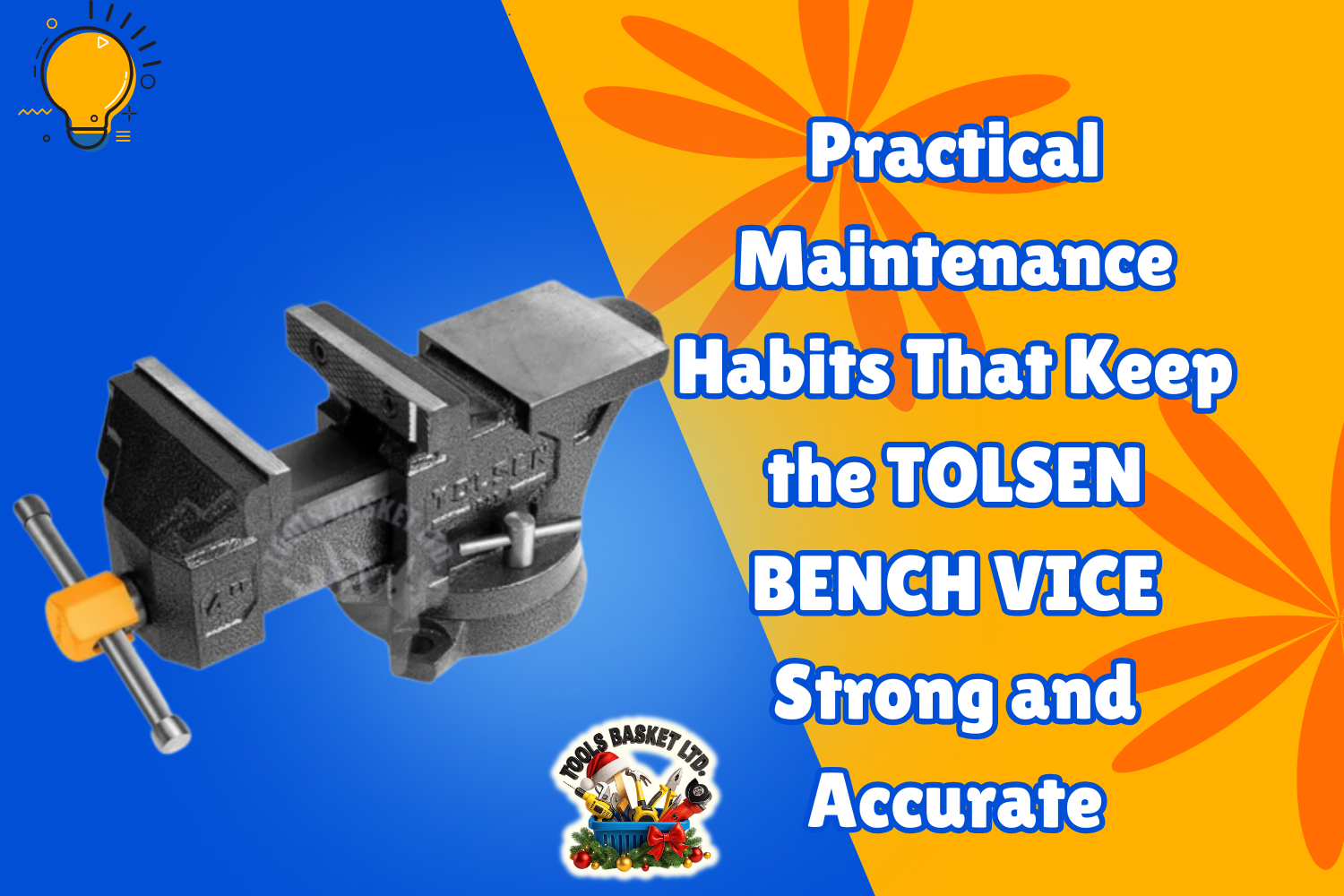
Practical Maintenance Habits That Keep the TOLSEN BENCH VICE Strong and Accurate

The TOLSEN BENCH VICE is a core workshop tool used for holding, clamping, bending, cutting, and assembly work. Because it is built from heavy duty metal, many users assume it needs little or no maintenance. In reality, regular care is essential to maintain gripping strength, smooth jaw movement, and long term reliability. Most bench vices lose effectiveness slowly due to dirt, misuse, and lack of lubrication.
Keeping the Screw Thread Clean and Lubricated
The screw thread is the heart of the TOLSEN BENCH VICE. Dust, metal filings, and grease collect along the threads during daily use. When this buildup is ignored, the vice becomes stiff and difficult to tighten evenly. Cleaning the screw thread and applying light lubrication allows smooth jaw movement and reduces internal wear.
Preventing Jaw Slippage and Uneven Clamping
Jaw slippage often develops gradually. Using the vice at an angle or clamping unevenly causes one side of the jaw to wear faster than the other. Over time, this reduces holding strength and accuracy. Proper alignment and even tightening help the TOLSEN BENCH VICE maintain strong and secure grip.
Avoiding Excessive Force Beyond Design Limits
A bench vice is designed for firm clamping, not extreme force. Using long pipes or hammering the handle to increase pressure stretches the screw and damages internal components. Applying controlled force protects the structure of the TOLSEN BENCH VICE and prevents permanent loosening.
Cleaning Metal Shavings and Debris After Use
Metal filings and dust accumulate quickly around the jaws and slide rails. If not removed, these particles cause abrasion and restrict smooth movement. Regular cleaning keeps the TOLSEN BENCH VICE operating smoothly and prevents premature wear.
Inspecting and Maintaining Jaw Faces
Jaw faces handle direct contact with workpieces. Over time, they may become rounded, chipped, or worn smooth. Inspecting jaw faces regularly ensures proper gripping performance. Replacing or maintaining jaws keeps the TOLSEN BENCH VICE accurate and safe to use.
Protecting the Vice from Rust and Corrosion
Moisture and workshop humidity cause rust even on heavy metal tools. Wiping the vice after use and applying light oil to exposed metal surfaces prevents corrosion. Rust prevention significantly extends the life of the TOLSEN BENCH VICE.
Ensuring Secure Mounting to the Workbench
A loose mounting reduces clamping stability and increases vibration. Periodically checking mounting bolts keeps the TOLSEN BENCH VICE firmly anchored and safe during heavy tasks.
Avoiding Hammering Directly on the Vice
Using the vice as an anvil damages jaw alignment and internal threads. Hammering on clamped workpieces transfers shock into the vice body. Using a proper anvil or work surface protects the TOLSEN BENCH VICE from structural damage.
Storing and Covering When Not in Use
When not used frequently, covering the vice protects it from dust and moisture. Proper storage ensures the TOLSEN BENCH VICE remains clean and ready for accurate clamping at any time.
Final Thoughts
A bench vice does not fail suddenly. It slowly loses grip and smooth operation due to neglect, dirt buildup, and misuse. By keeping threads clean, jaws aligned, surfaces protected, and mounting secure, the TOLSEN BENCH VICE delivers strong and reliable clamping for many years.
Consistent maintenance improves safety, accuracy, and productivity in any workshop where the TOLSEN BENCH VICE is used.