
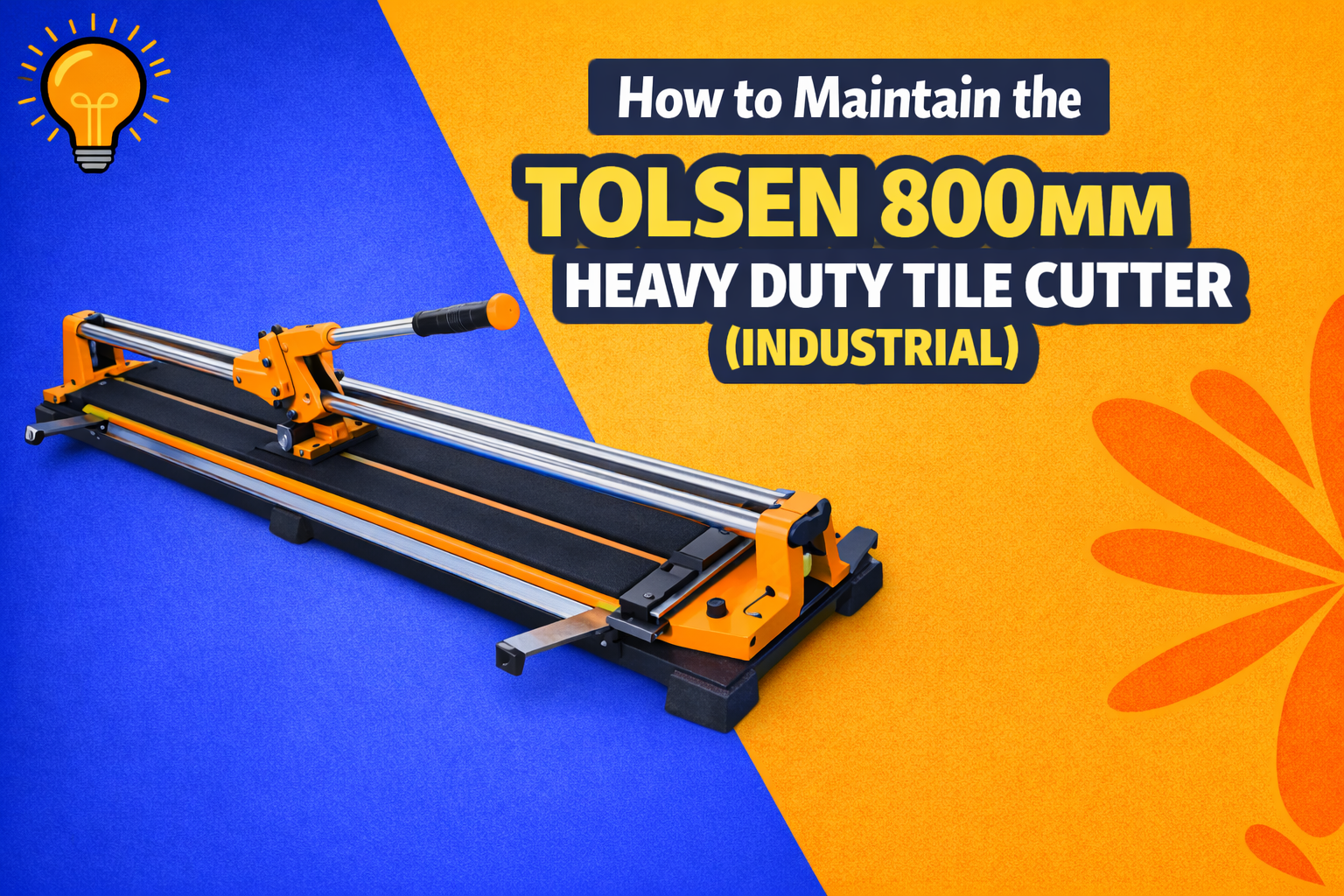
How to Maintain the TOLSEN 800MM HEAVY DUTY TILE CUTTER (INDUSTRIAL)

Introduction
For large tiling projects — whether flooring in a commercial building, renovations in an apartment block, or outdoor paving in Kenya’s towns and estates — the TOLSEN 800MM HEAVY DUTY TILE CUTTER (INDUSTRIAL) is built to handle bigger tiles with precision, strength, and efficiency. This industrial‑grade cutter delivers straight, clean cuts on ceramic and porcelain tiles up to 800 mm, saving time and improving finish quality.
However, like any precision tool, regular maintenance is crucial to ensure consistent performance, prolong service life, and reduce the risk of costly mistakes or breakdowns. This guide will walk you through the practical maintenance steps every owner in Kenya should follow.
Why Maintenance Matters
The TOLSEN 800MM HEAVY DUTY TILE CUTTER (INDUSTRIAL) consists of precision rails, a scoring wheel, and moving parts that experience wear, dust buildup, and mechanical stress over time. Without good maintenance:
- Scoring becomes irregular
- Cuts become uneven
- Parts wear out faster
- Operational safety is compromised
A simple routine keeps the cutter reliable and safe for every job.
Daily Maintenance: Simple Habits That Make a Big Difference
1. Clean After Every Use
Tiles produce a lot of dust, grit, and fragments during cutting.
Daily steps:
- Wipe down the entire cutter with a clean, dry cloth
- Remove tiles shards from rails, scoring assembly, and base plate
- Sweep away loose debris from moving parts
Why this matters:
Dust and particles can cause scoring wheels to skip and rails to bind, leading to uneven cuts.
2. Inspect the Scoring Wheel
The scoring wheel is the heart of your tile cutter.
Check for:
- Chips, wear, or flat spots on the wheel
- Accumulated tiles dust stuck in the wheel groove
- Uneven scoring marks after cutting
If the wheel is worn, replace it before it affects cut quality.
3. Check Guide Rails and Rollers
Guided movement is essential for straight, clean cuts.
What to inspect:
- Smooth roller motion along the rails
- No visible rust or debris on the rails
- No wobble in the scoring head
If movement feels gritty or stiff, clean and lubricate lightly (see below).
Weekly Maintenance: Keep Things Moving
1. Lubricate Moving Parts
Heavy duty use and dust accumulation can dry out moving components.
How to lubricate:
- Apply a few drops of light machine oil or silicone lubricant to the guide rails
- Work the cutter back and forth to spread the lubricant
Why this helps:
Lubrication reduces friction, prevents rust, and extends the life of bearings and rollers.
2. Tighten Bolts and Fasteners
Vibration and repeated use can loosen screws and bolts over time.
Check these areas:
- Fasteners holding the scoring assembly
- Adjustable stops or stops on rails
- Any guard screws or alignment brackets
Tip:
Use the correct screwdriver or wrench to avoid stripping heads.
Monthly Maintenance: Deep Care
1. Check Tile Support Platforms
Many industrial cutters have angled supports and adjustable platforms.
Ensure:
- Platforms are level
- Adjustment screws and brackets are clean
- No worn out teeth or misalignments
A well‑aligned support keeps tiles steady and reduces chipping.
2. Inspect Cutting Base and Rubber Feet
For safety and accuracy:
- Clean the base plate thoroughly
- Check that rubber feet or stoppers are intact
- Replace feet if worn to maintain stable placement on the floor or bench
Stable footing improves cut accuracy and protects the cutter from unnecessary wear.
Rust Prevention: A Major Concern in Kenyan Environments
Kenya’s coastal humidity and inland dust can accelerate rust if tools aren’t protected.
Simple rust‑prevention habits:
- Wipe metal surfaces dry after cleaning
- Apply a thin coat of light oil to rails and scoring wheel axle
- Store the cutter in a dry space after work
Rust not only slows movement but also damages surfaces over time.
Storage Tips
Proper storage preserves performance and prevents costly damage.
Best practices:
- Cover the cutter when not in use to keep dust out
- Keep it in a dry, sheltered area
- Avoid stacking heavy items on top
- Use silica gel packs in closed storage areas to reduce moisture
These steps protect both precision parts and fasteners from corrosion.
Avoid These Common Maintenance Mistakes
❌ Letting Dust Pile Up
Dust buildup increases friction and can cause scoring wheels to skip.
Fix: Wipe down surfaces and rails after every job.
❌ Ignoring Worn Scoring Wheels
A worn wheel produces uneven cuts and leads to tile wastage.
Fix: Replace the wheel at the first sign of wear.
❌ Using Grease Instead of Light Lubricant
Heavy grease captures dust and clogs moving parts.
Use: Light machine oil or silicone spray instead.
❌ Storing in Damp Conditions
Moisture speeds up rust and damages metal surfaces.
Solution: Store in a dry, ventilated space with moisture absorbers.
Practical Tips for Kenyan Worksites
Whether you’re working on residential floors, commercial project sites, or outdoor paving jobs:
Protect from dust
Cover rail ends and pivots between cuts.
Keep a cleaning kit nearby
A cloth, brush, and light oil help you perform quick maintenance on the go.
Work on a stable surface
Set the cutter on a flat, level bench to avoid misaligned cuts.
Check before heavy jobs
If you’re cutting large batches, inspect rollers and scoring wheel more often.
Conclusion
Maintaining your TOLSEN 800MM HEAVY DUTY TILE CUTTER (INDUSTRIAL) doesn’t have to be complicated. With daily cleaning, weekly lubrication, monthly checks, and proper storage, you’ll enjoy:
- Accurate, clean tile cuts
- Consistent performance on big projects
- Longer service life of your machine
- Reduced downtime and repair costs
Take a few minutes each day to care for your cutter — and it will make your tiling work easier, faster, and more precise.
📍 Nakuru, Dimples Building
🌐 www.toolsbasket.co.ke
📞 +254 718 281 281