
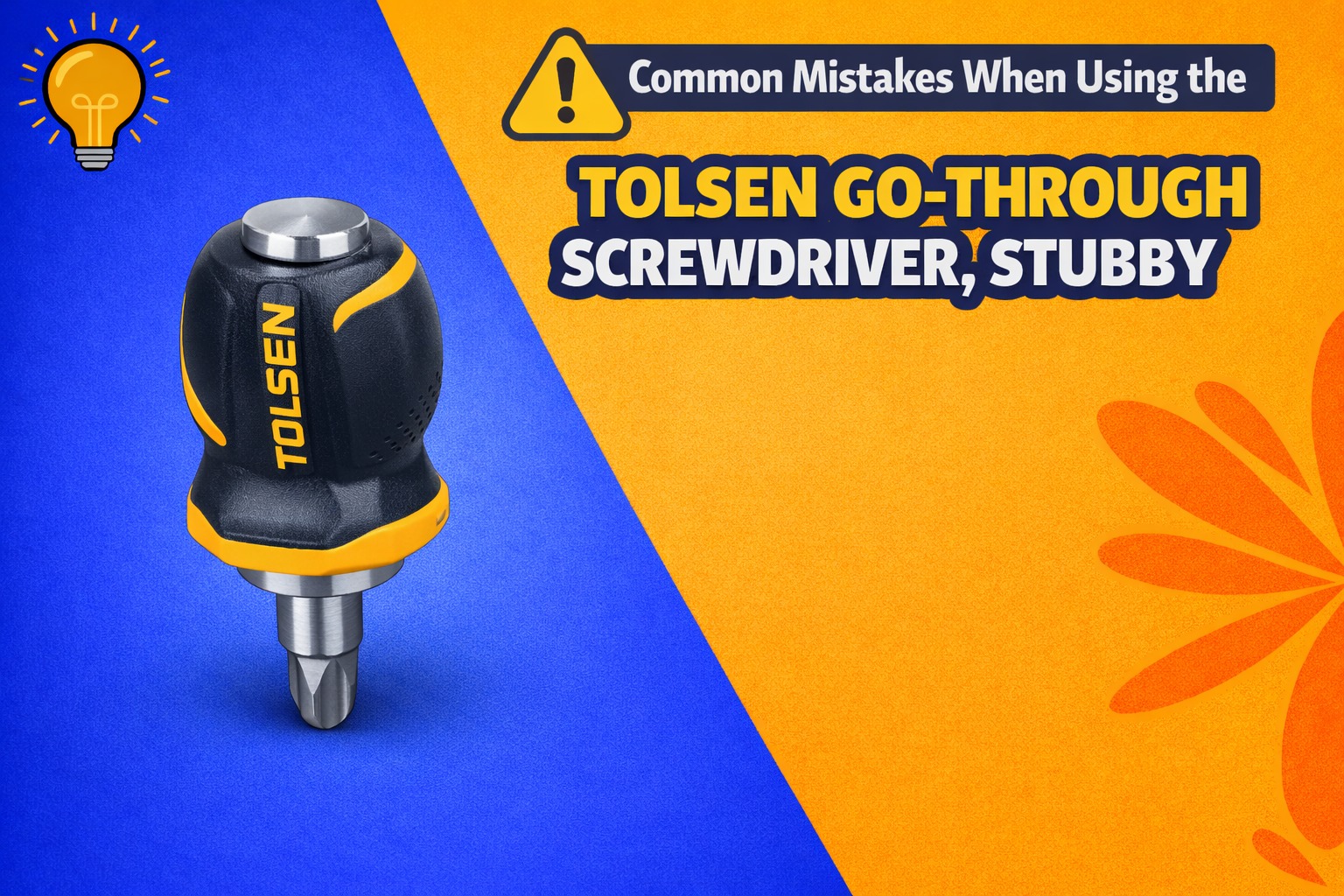
Common Mistakes When Using the TOLSEN GO-THROUGH SCREWDRIVER, STUBBY

Introduction
The TOLSEN GO‑THROUGH SCREWDRIVER, STUBBY is a handy tool for working in tight and awkward spaces where a standard screwdriver won’t fit. Whether you are tightening fixtures in Nairobi’s cramped cabinets, adjusting switches behind electrical boxes, or working on machinery in workshops across Kenya, this stubby screwdriver saves time and improves control.
However, even a simple tool like this can underperform or get damaged if not used properly. Many users make basic mistakes — leading to stripped screws, broken tips, and frustration on the job. This guide highlights the most common mistakes people make when using the TOLSEN GO‑THROUGH SCREWDRIVER, STUBBY and how to avoid them.
Mistake 1: Using the Wrong Tip for the Screw
One of the most frequent errors is choosing the wrong tip type for the screw head.
Why it matters:
- Mismatched tips slip easily
- Screw heads get damaged
- Tool tip wears prematurely
Avoid it by:
Matching the screwdriver tip to the screw head (flat, Phillips, or other) before starting the task.
Mistake 2: Using Excessive Force
Because the stubby design gives less leverage, many users push harder to make screws turn.
Consequences:
- Stripped screw heads
- Slipped tool tip
- Sore hands
Better technique:
Use controlled, steady pressure. If the screw is stuck, back it out slightly and apply a penetrating lubricant instead of forcing it.
Mistake 3: Ignoring Handle Positioning
Proper grip and hand positioning are key with this stubby tool.
Issue:
Holding the handle too loosely or off‑centre causes slippage.
Result:
- Reduced torque
- Loss of control
- Increased fatigue
Tip:
Hold the stubby screwdriver firmly in the palm and keep your wrist aligned to maximise control.
Mistake 4: Using the Screwdriver as a Lever or Pry Bar
The TOLSEN GO‑THROUGH SCREWDRIVER, STUBBY is designed for turning screws — not prying lids, removing nails, or scraping surfaces.
Why it’s wrong:
- Bends or breaks the shaft
- Damages the handle
- Reduces precision
Correct tool:
Use a pry bar or chisel for prying tasks — keep the stubby screwdriver for screws only.
Mistake 5: Failing to Maintain the Tip
A worn or damaged tip slips easily and damages screw heads.
Signs of wear:
- Rounded or chipped edges
- Poor engagement with screws
- Slipping during turning
Maintenance tip:
Inspect the tip regularly and replace the stubby screwdriver if it shows significant wear.
Mistake 6: Not Using Safety Protection
Even in small tasks, screwdrivers can cause injuries if used without proper safety gear.
Common oversights:
- No eye protection
- No gloves
Risks:
- Debris or metal shavings in the eyes
- Hand injuries from slips
Always use:
Protective glasses and gloves — especially in workshops or on heavy‑duty jobs.
Mistake 7: Ignoring Workpiece Stability
Trying to turn screws on unstable surfaces leads to mistakes and tool damage.
What happens:
- Screwdriver slips
- Surface or fastener damage
- Injury risk
Best practice:
Secure the workpiece with clamps or hold it steady before applying the stubby screwdriver.
Mistake 8: Using Dull or Dirty Tools
Dirt, grease, and metal filings build up around the tip and shaft with frequent use.
Effects:
- Reduced grip
- Slipping
- Increased effort
Solution:
Wipe the tool clean after each use and remove debris before starting a new task.
Mistake 9: Applying Torque Incorrectly
Because the stubby screwdriver has a short handle, people sometimes twist it at awkward angles.
Problem:
- Uneven torque
- Tip slipping
- Fastener damage
Advice:
Keep your wrist aligned with the shaft and apply torque straight along the screw axis — not at an angle.
Mistake 10: Ignoring Tool Storage
Leaving the TOLSEN GO‑THROUGH SCREWDRIVER, STUBBY in dusty or damp spots accelerates wear.
Problems:
- Rust forming on metal surfaces
- Handle damage
- Tips losing precision
Storage tip:
Keep your stubby screwdriver in a dry toolbox, pouch, or organised rack to protect it from dust and moisture.
Practical Tips for Kenyan Worksites
Kenyan work environments — including workshops, roadside jobs, and construction sites — often expose tools to dust, humidity, and heavy use. To keep your TOLSEN GO‑THROUGH SCREWDRIVER, STUBBY performing well:
Keep it clean
Wipe down after every use, especially after dusty or greasy jobs.
Protect from rust
Apply a thin film of light machine oil on the metal parts if you work in coastal or humid regions.
Choose the right tip
Carry a small set of stubby screwdrivers or interchangeable bits so you always have the correct tip.
Conclusion
The TOLSEN GO‑THROUGH SCREWDRIVER, STUBBY is a simple yet powerful tool — but incorrect use can reduce its effectiveness and lifespan. Avoiding common mistakes such as using the wrong tip, applying excessive force, ignoring safety gear, or misusing the tool as a pry bar makes your work easier, faster, and safer.
When you use it correctly and take simple care of the tool, your stubby screwdriver will be ready for many tasks across Kenya.
📍 Nakuru, Dimples Building
🌐 www.toolsbasket.co.ke
📞 +254 718 281 281